Role
Product Designer & Chief of Staff
Timeline
2 years
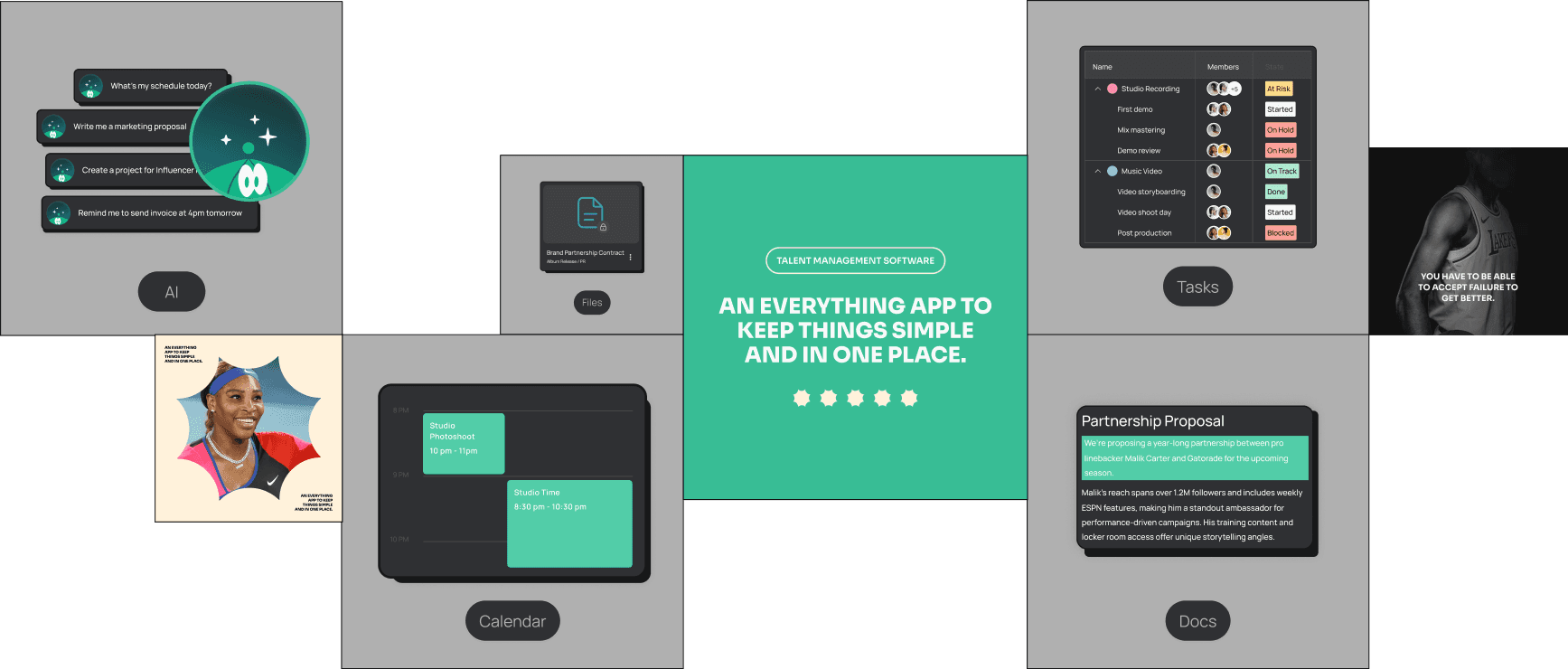
Umbrella Product is a productivity suite designed for talent managers and creative professionals. Working alongside the founder and engineering team, I helped shape the product from early concepts to multiple iterations to launch, over two years.
Coming from the sports management industry, the founder saw the same pattern repeatedly: conversations scattered across text messages, emails, and DMs; schedules lived in calendars; files lived somewhere else; and existing productivity software wasn't designed around the way talent managers actually worked.
Rather than adapting another project management tool, we wanted to rethink how creative work could be organized from the ground up.
Existing tools assumed one way of working.
Most project management tools being once a project exists. Through interviews and experience, we found that talent managers didn't think about work as isolated projects. Their work revolved around relationships that evolved over time. From conversations and negotiations to signed deals, schedules, deliverables, and ongoing communication.
Rather than asking how to manage projects, we began asking:
How should opportunities, conversations, deals, and projects connect into a single workflow?
How do you design a workflow around relationships rather than tasks?
How can we create a workflow that mirrors the way talent managers actually work. From conversations and negotiations to signed deals and ongoing projects?
The product evolved alongside our understanding of users.
For many talent managers, work begins with a conversation, an opportunity, or a relationship. Our challenge was designing a system that could support that journey. From first contact to signed deal to active work.
Over two years, the product changed significantly as we learned more about how our users thought about their work.
Rather than treating these iterations as redesigns, we viewed each as a step toward a better mental model.


Flexibility became more valuable than consistency.
One insight surfaced repeatedly during testing.
No two managers had the same workflow.
Some worked primarily from calendars. Others lived in conversations. Some relied heavily on files and notes.
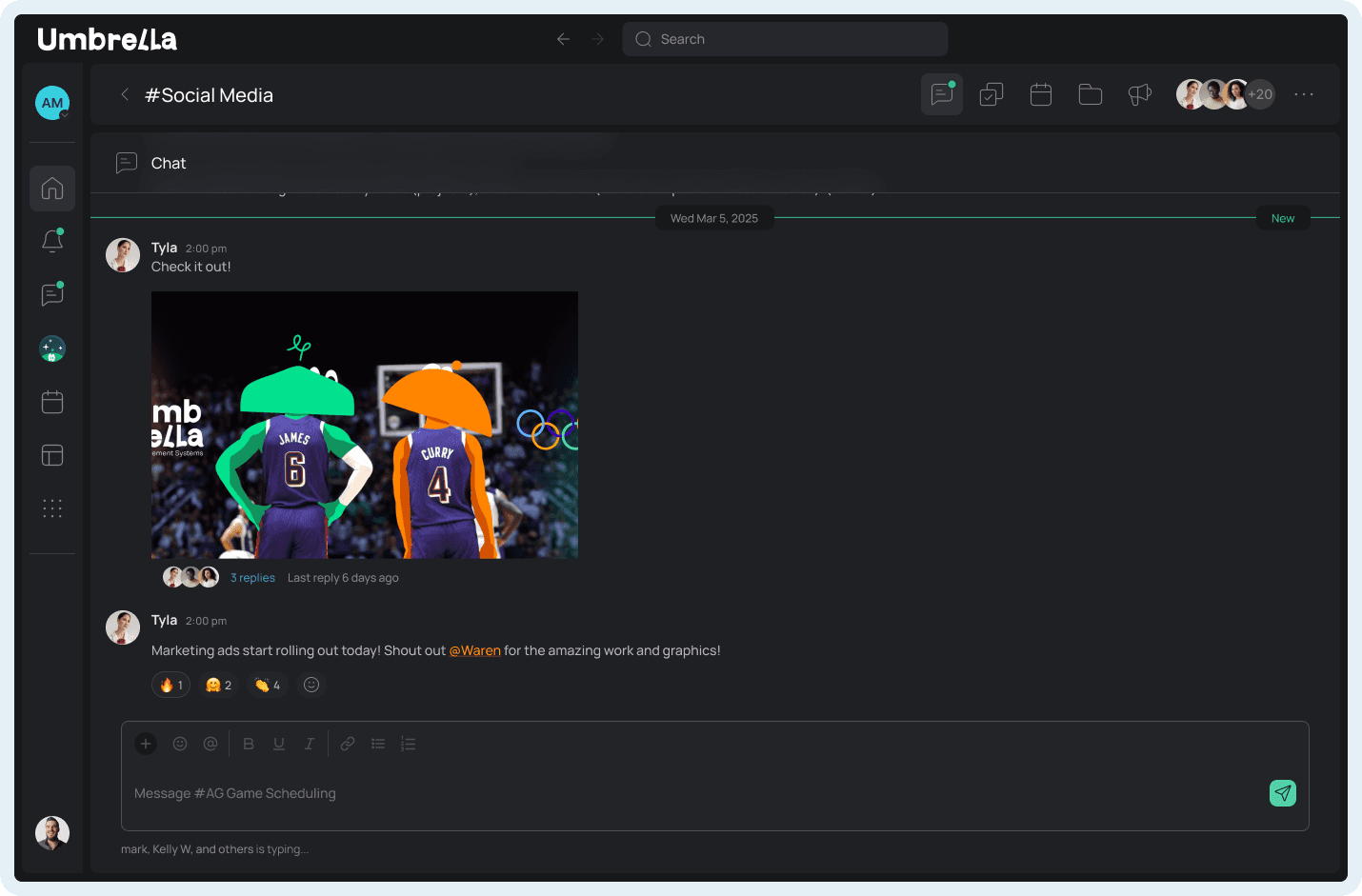
Instead of shipping the same set of tools inside every project, we redesigned the product around modular workspaces. Users could start with templates or build a workspace around the tools that matched their own workflow.
This also reduced unnecessary loading by only displaying the tools users actually needed.


Organization should feel organic.
As users created more projects, we looked for ways to make organization feel less administrative.
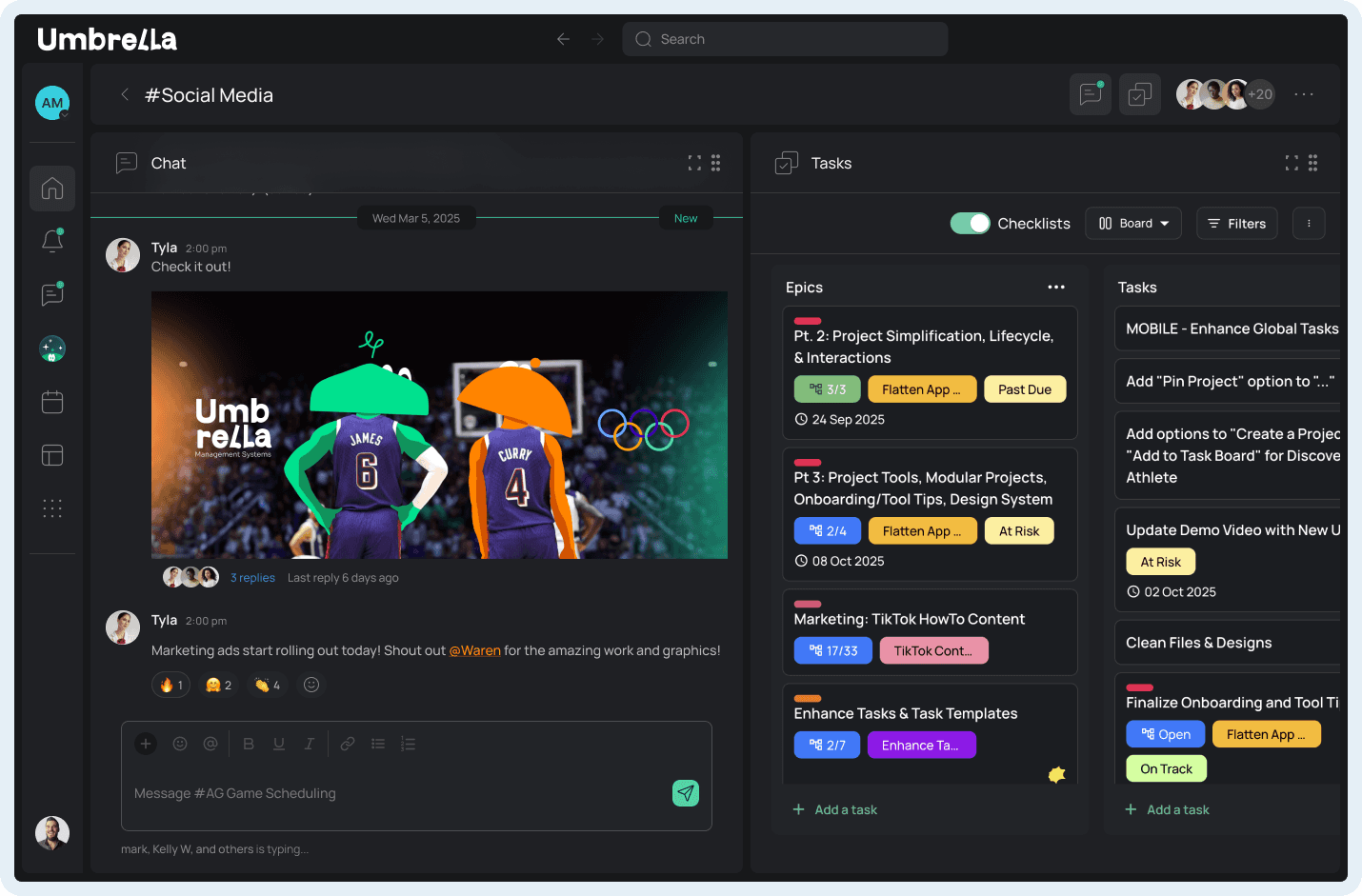
We explored drag-and-drop interactions that allowed projects to be grouped naturally instead of relying on nested menus and configuration screens.


Conversation shouldn't become dead ends.
The founder's original insight still guided the product.
Important work often began inside a conversation.
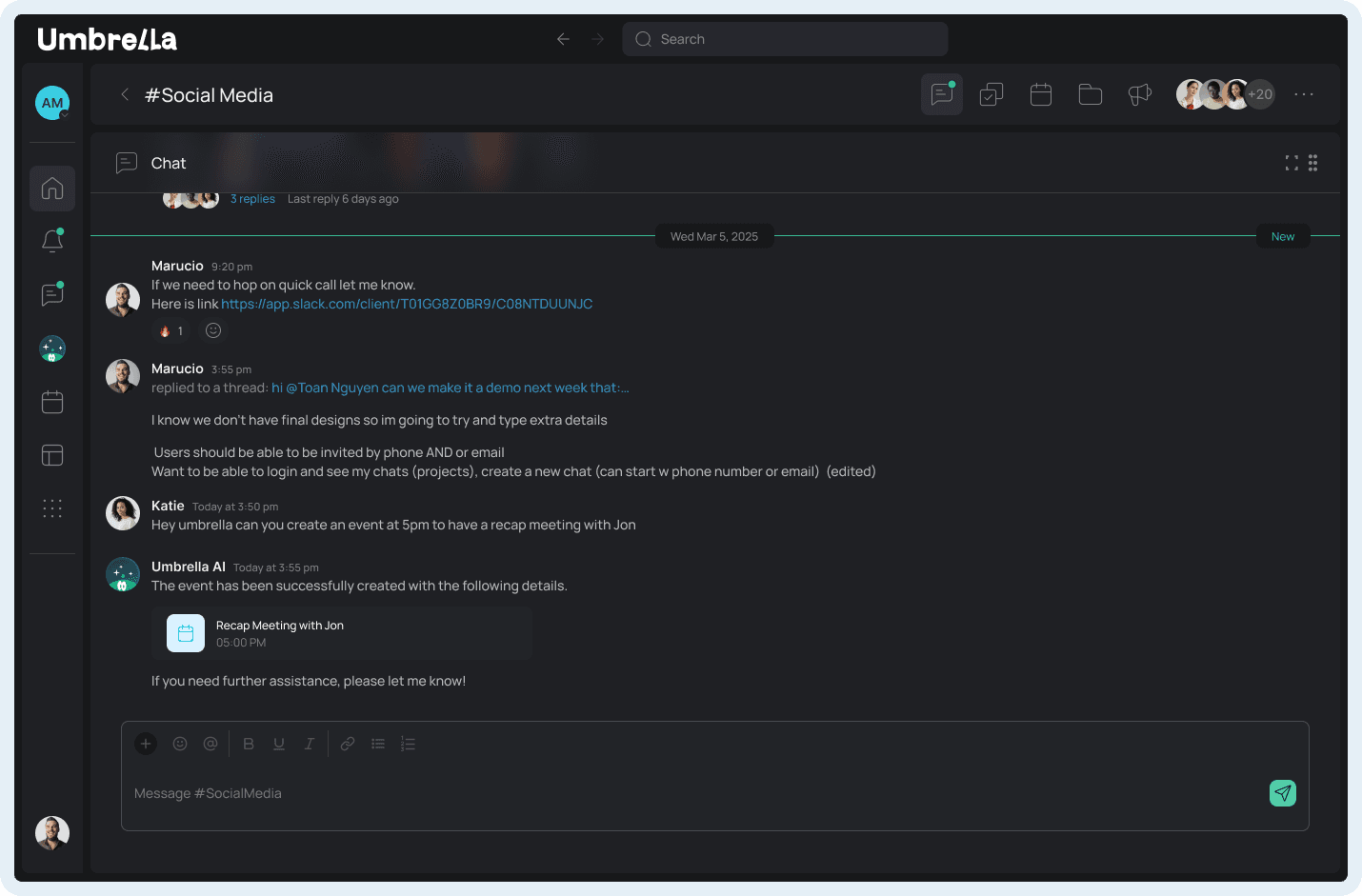
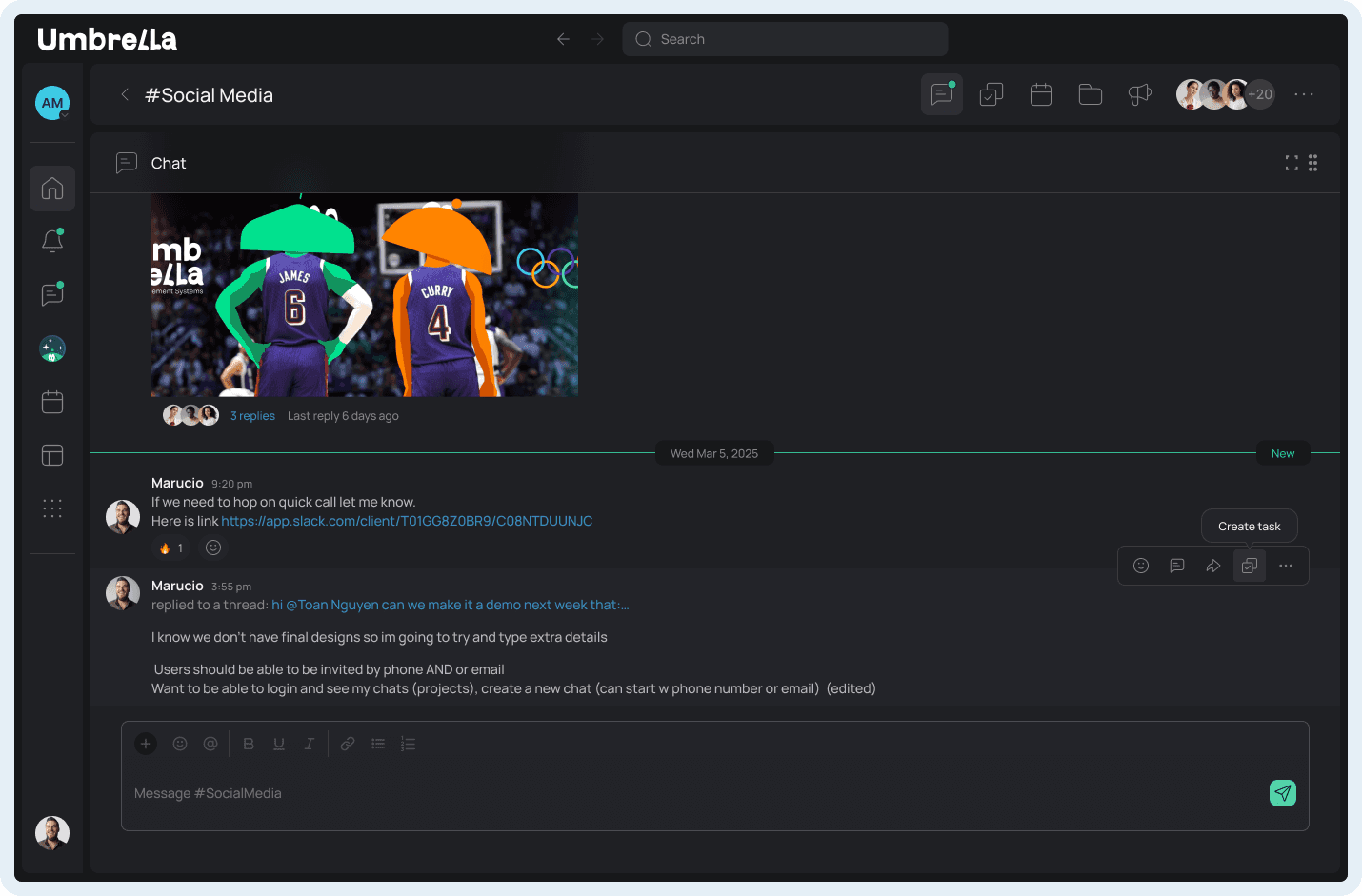
We designed interactions that allowed users to convert messages directly into tasks and events, making it easier to move from discussion to action without switching between tools.
Reflection
This project taught me how to design in ambiguity.
Working at a lean startup reinforced that progress comes from iteration, not perfection. Shipping ideas early gave us the feedback we needed to challenge assumptions and continuously improve the product.